
RECLAIM YOUR CAPABILITY. REBUILD YOUR MINDSET.
A Marine Corps-inspired fitness system for men and women over 40 who refuse to accept physical decay. Stop the fad diets and start moving with purpose.

Created by a Marine Veteran who beat body decay using the Marine Corps Way.

REAL PEOPLE. REAL STRUGGLES. REAL REBUILDS.
You’re not here because you want to be impressed by strangers. You’re here because something in your life snapped you awake. Your knees. Your back. Your energy. Your confidence. Your identity.
The Window Is Closing
After 40, capability doesn’t fade all at once. It slips away quietly when movement becomes optional.
After 40, capability doesn’t disappear all at once. It erodes quietly when movement becomes optional.
What used to resolve after a good night’s sleep starts sticking around. Tight hips. Achy knees. A back that reminds you it exists every time you stand up.
This isn’t about age. It’s about timelines.
Most people treat fitness like a “someday” problem. Someday I’ll fix this. Someday I’ll get serious. After 40, “someday” is how capability gets traded for comfort, one small compromise at a time.
You feel it when you hesitate before picking something up.
You feel it on the stairs.
You feel it when your confidence in your own body isn’t what it used to be.
That’s decay. Not as an event, but as a pattern.
The decade you’re in right now determines how you move in your sixties and seventies. Whether you can carry your own weight, or whether you need help doing it.
The window isn’t closed yet.
But it is closing.
Waiting doesn’t make it easier.
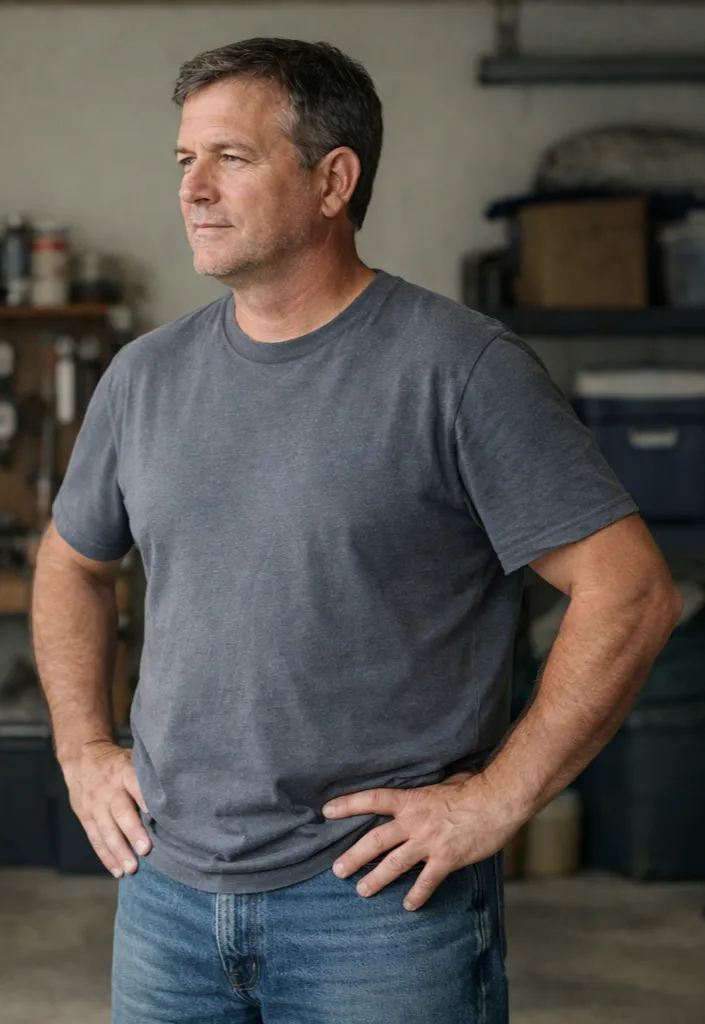
This isn't theory. It's Lived.
I rebuilt my body after 40 by applying the same readiness principles I learned in the Marine Corps, starting with my own breakdown.
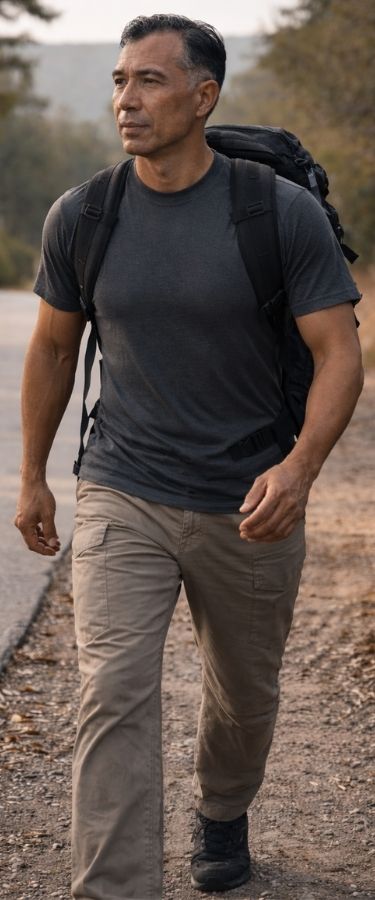
Semper Ruck wasn’t built from trends, studies, or fitness industry opinions.
It was rebuilt from principles that had already been tested under real load, over time, with consequences.
When I served in the Marine Corps, readiness wasn’t about aesthetics. It was about function. Moving under load. Repetition. Standards that didn’t change when things got uncomfortable.
Those principles didn’t stop working, they just needed to be applied correctly.
Semper Ruck exists because those fundamentals still work when everything else starts to fail.
I've been where you are
I didn’t build Semper Ruck because I was inactive or undisciplined.
I built it because at 49, my body stopped cooperating. Sciatica that lingered for months. Chronic back pain. Gout that shut me down without warning.
I wasn’t lazy. I wasn’t clueless. I was experienced, disciplined, and frustrated because none of the usual answers worked.
That’s when it became clear the problem wasn’t effort. It was approach.
I reapplied the same principles I learned decades earlier, this time to a body that had more miles and less margin for error.
The result wasn’t just less pain.
It was capability returning.
SEMPER RUCK - THE STORY
An Independent overview of the Semper Ruck system, the science behind rucking after 40, and why this approach works when everything else hasn't.
THE SEMPER RUCK SYSTEM
Not a workout. Not a hack. A way to train capability back into your body.
Most people think rucking just means putting weight on your back and walking.
That’s not a system. That’s a stressor.
The Semper Ruck System is a structured approach to rebuilding capability using the same principles the Marine Corps has relied on for more than 225 years. Not for aesthetics. Not for competition. For readiness that holds up over time.
This isn’t random movement. And it’s not cardio disguised as toughness.
The system is built around three non-negotiables.
LOAD IS INTENTIONAL
Weight isn’t added for bragging rights. It’s selected based on where your body is now and increased only when your structure can support it. Load trains posture, bone density, connective tissue, and real-world strength. Done wrong, it breaks people. Done correctly, it rebuilds them.
MOVEMENT IS FUNTIONAL
This is not a gym workout. You move the way life actually demands. Upright. Under load. Over distance. On real terrain. The goal isn’t exhaustion. It’s competence while carrying weight, because that’s what aging bodies lose first.
PROGRESSION IS CONTROLLED
Only one variable changes at a time. Load, distance, or pace. Never all three. That’s how you adapt without blowing yourself up. That’s how you train for longevity instead of burnout.
This is the difference between rucking and weighted walking.
Weighted walking chases calories.
The Semper Ruck System rebuilds structure.
Weighted walking ignores recovery.
The Semper Ruck System protects it.
Weighted walking asks, “How hard can I go today?”
The Semper Ruck System asks, “Can I still do this ten years from now?”
This isn’t about getting ripped.
It’s about being able to carry your own weight. Literally.
The Semper Ruck System exists to give you clarity, standards, and a repeatable path forward. No guessing. No shortcuts. No punishment disguised as fitness.
Just a proven way to rebuild capability and keep it.
Created by a Marine Veteran who beat body decay using the Marine Corps Way.
Why Rucking Works After 40
Because impact breaks bodies faster than effort builds them.
Running has its place. High-intensity workouts have their place. But after 40, the cost of impact starts to outweigh the benefit for most people.
Rucking is different.
Rucking loads the body without pounding it. You’re moving forward under weight, but your joints aren’t absorbing repeated shock.
That matters when recovery slows and connective tissue takes longer to adapt.
This is why rucking scales where other methods don’t.
LOW IMPACT. HIGH RETURN
You can train frequently without beating yourself up. That consistency is what actually drives long-term results.
REAL STRENGTH, NOT GYM STRENGTH
Carrying load builds the kind of strength that shows up in daily life. Posture. Grip. Core stability. Bone density. The things that quietly disappear first with age.
CARDIO WITHOUT CHAOS
Rucking elevates heart rate naturally through load and distance, not frantic movement. You build endurance without redlining your nervous system.
BUILT FOR LONGEVITY
You can ruck at 45. You can ruck at 65. The system adapts as you do, without asking you to pretend you’re still 25.
Running asks your body to absorb force.
Rucking asks your body to manage it.
After 40, that difference matters.
That’s why Semper Ruck doesn’t chase intensity. It builds capability you can keep.
RECRUIT TRAINING
Getting Started Rucking
Recruit isn’t a getting started rucking program. It’s a reset.
It’s the entry point to the Semper Ruck System, designed to rebuild movement, load tolerance, and discipline before anything gets harder. No hype. No shortcuts and No expectations that your body should behave like it’s 25.
The Recruit Training is a structured, four-phase progression that teaches you how to move under load again the right way. You learn how to walk with intent, carry weight correctly, manage recovery, and rebuild consistency without breaking yourself.
This is where joints stop hurting because movement gets smarter.
This is where confidence comes back because capability follows structure.
This is where you stop guessing.
You don’t earn speed here. You don’t chase intensity here. You rebuild the foundation that everything else depends on.
Complete Recruit, and you don’t “graduate.”
You qualify.
Once you finish the four phases, you move forward into the Semper Ruck Tiers, where load, distance, pace, and standards begin to matter.
Recruit Training makes sure you’re ready for that step, physically and mentally.
Start here.
Earn your base.
Then move up.
Start Free Recruit Training by joining the Semper Ruck community
Created by a Marine Veteran who beat body decay using the Marine Corps Way.
WHAT COMES AFTER RECRUIT
RECRUIT ISN'T THE PROGRAM, IT'S THE GATE.
Recruit establishes the foundation. It restores consistent movement, rebuilds basic load tolerance, and reintroduces discipline without unnecessary complexity. For some people, Recruit may be all they ever need.
Everyone who starts Recruit is part of the Semper Ruck community. The community provides shared structure, accountability, and a common standard for people rebuilding capability through movement under load.
For others, capability continues to grow.
Progressing beyond Recruit requires continued structure and higher standards. The Committed level exists for those who choose to move through the full tiered system, with defined advancement criteria and long-term accountability. Advancement is never automatic. Each tier must be earned by meeting the requirements of the tier below it.
This is not a program you complete. It is a system you operate inside.
Everyone starts at Recruit.
How far you go is up to you.
Marine Corps Inspired Tiered System
The Semper Ruck system is built around tiers because capability is developed progressively, not all at once. In the Marine Corps, training is standards-based and cumulative, requiring demonstrated proficiency before advancing to greater demands, as outlined in NAVMC 3500.44D.
Each tier in Semper Ruck defines a specific level of load, distance, and discipline that must be met before progression occurs. Advancement is earned through execution, not time, motivation, or intensity, ensuring durability and long-term capability rather than short-term performance.
BOOT
Boot traces its origin directly to Marine Corps basic training. Boot camp exists to rebuild fundamentals under discipline before anyone is expected to perform.
In Semper Ruck, Boot serves the same role. Recruit reintroduced movement and load. Boot assumes that’s now normal and begins structuring it.
Completion of Boot means you can ruck 3 miles with 30 pounds at a controlled, repeatable pace without breakdown.
Load increases, distance extends, pace starts to matter, and recovery becomes deliberate instead of accidental.
This phase isn’t about intensity or heroics. It’s controlled work repeated until it holds.
Boot exists to prepare your body and habits for sustained effort, not short bursts.
HUMP
HUMP comes from what is expected of Marines after boot camp.
Once training ends, moving under load is no longer optional. It’s part of the job. In Semper Ruck, HUMP reflects that same expectation through a fixed standard.
Completion of HUMP means meeting 6 miles with 45 pounds at a sub 15-minute per mile pace and being able to recover and repeat the work.
Boot built the frame. HUMP tests whether it holds under real weight, real distance, and real time pressure.
Posture, bracing, pacing, fueling, and recovery all matter here because shortcuts show immediately.
HUMP exists to prove you can perform under load and still be ready for what comes next.
POG
POG (Poag) means"Personnel Other than Grunt", and is the slang term for non-03's (oh threes), these are Marines who serve in non-infantry billets who are still expected to move, carry, and meet standards even when combat arms isn’t their primary role. In Semper Ruck, POG is about consistency under pressure.
Completion of POG means you can sustain 9.3 miles with 55-pounds at a sub 15-minute per mile pace on a regular, repeatable basis without performance degradation.
The standard doesn’t change. What changes is frequency and control.
Load stops being something you peak for and becomes something you manage.
POG exists to turn a hard requirement into a normal operating condition so performance stays steady instead of spiking and collapsing.
GRUNT
In Marine Corps terms, Grunt refers to infantry Marines whose role requires constant readiness, not occasional performance.
In Semper Ruck, Grunt represents durability under sustained demand.
This tier assumes load, distance, and pace are already controlled. The requirement now is reliability under increased frequency, responsibility, and imperfect conditions.
Completion of Grunt means you can ruck 12 miles with 65 pounds at a sub-15-minute-per-mile pace on a regular, repeatable basis without performance degradation.
Grunt exists to harden what has already been built so capability holds when conditions are less than ideal.
This is where the work shifts from training to sustained operational readiness.
HARD CHARGER
Hard Charger takes its name from Marines who consistently exceed baseline expectations through reliability, not intensity.
This tier is not about achieving a new metric once. It is about sustaining output under load while managing accumulated fatigue and responsibility.
Completion of Hard Charger means you can ruck 15 miles with 75 pounds at a sub-15-minute-per-mile pace without loss of form, pace, or consistency.
At this level, load and distance are no longer the primary challenge. Fatigue management is.
Hard Charger exists to identify those who can be relied on to perform when conditions are unfavorable and recovery is incomplete.
This is where discipline fully replaces motivation.
CHESTY PULLER
Chesty Puller represents the outer edge of the Semper Ruck system.
Named for Lt. Gen. Lewis “Chesty” Puller, this tier is not about speed or athletic dominance. It is about bearing extreme load over long distance while remaining structurally intact.
Completion of Chesty Puller means you can ruck 20 miles with 100 pounds at an 18-minute-per-mile pace without breakdown in posture, movement, or recovery.
This is not a standard most people need to meet. It exists to define the upper boundary of what durable capability looks like, not as a requirement for participation.
Chesty Puller exists as a mark of the Old Breed: the ability to carry a legendary burden, deliberately, without breaking the chassis.
Created by a Marine Veteran who beat body decay using the Marine Corps Way.
FREQUENTLY ASKED QUESTIONS
What is Rucking?
In today's fitness world, rucking has been oversimplified as walking with weight. Rucking is a purposeful, loaded movement using a backpack to move yourself and equipment from one point to another. In military terms, it exists to get people and gear where they need to go without sacrificing capability. Rucking isn't the same as walking with weight. Rucking has intent, an intentional load, and a standard for how and why you move. If you’re carrying weight just because someone said it burns calories, that’s a weighted walk. There’s nothing wrong with that, but it isn’t rucking.
Is Rucking Safe for Knees and Back?
Rucking is safe for your knees and back when done correctly, but harmful when it’s done wrong. I know because I did it wrong first, going too heavy, too long, and too fast, and I paid for it with injuries. My body doesn't heal as fast as when I was in my 20's, so it was a setback. When I followed proper progression, rucking didn’t damage my knees; it fixed them. Walking under load keeps impact low while delivering consistent, controlled stress that improves joint nutrition through synovial fluid movement rather than breaking cartilage down. At the same time, it strengthens the muscles that protect your knees and spine, so force is absorbed by the structure, rather than dumped into joints. Rucking didn’t magically heal me, but disciplined progression changed everything. The free Recruit Training program inside the Semper Ruck community outlines safe progression and recovery from day one.
Is Rucking Better Than Running After 40?
It depends on your goal. If your goal is speed or race performance, running is necessary. If your goal is durability, joint health, and long-term capability, rucking is often the better choice. Running delivers repeated high-impact forces. Rucking delivers a sustained load with lower impact per step. For many people over 40, that tradeoff allows consistent training without breaking down. The Semper Ruck system is built around that long-term tradeoff.
What Weight Should I Start With
Light enough to move well. Heavy enough to matter. If you are new, movement comes first. Walk without weight until the distance feels normal. Then add the load gradually. Rucking is built on progression. Load, distance, pace, and terrain are trained one at a time, not all at once. The free Recruit Training program inside the Semper Ruck community lays out this progression step by step.
Do I Need Special Gear to Start?
No. A backpack that fits and doesn’t bounce is enough to begin. Most people already own what they need.
As you progress, equipment becomes more important. Load increases, distance extends, and posture becomes non-negotiable. Gear should follow capability, not precede it. The Recruit Training program is designed so you can start without buying anything.
SEMPER RUCK BLOG

The Best Rucking Backpack for Beginners Over 40: What to Carry and What to Skip
The best rucking backpack for beginners over 40, ranked by what actually holds up under load. What to buy at every budget, and the three things to skip. ...more
Functional Strength
August 10, 2026

Rucking Ended My Sciatica and Gout at 48. Here's Exactly How I Did It.
A Marine vet ended 5 months of sciatica and gout at 48 with rucking. No gym, no fad diet. The exact method to start rucking over 40 and rebuild your body. ...more
Functional Strength
August 10, 2026
Early Morning Rucking Over 40: Why the Bonus Mile Builds More Than Fitness
Early morning rucking over 40 builds more than fitness - it builds the discipline that transfers everywhere. Marine vet Brett on hitting 275 training hours and why the bonus mile matters. ...more
Semper Ruck Culture
May 11, 2026•10 min read
The 4 Variables That Make Every Ruck Session Count (For Athletes Over 40)
Master the 4 ruck training variables - load, distance, pace, and intent - that turn every session into real progress. Marine vet Brett breaks it all down. ...more
Semper Ruck Culture
April 29, 2026•10 min read

How to Ruck 7 Miles With 55 Pounds and Stay in Your Target Heart Rate Zones
Learn to ruck 7 miles with 55 lbs while training in heart rate zones. A Marine vet, 50+, breaks down what actually builds fitness under load. ...more
Semper Ruck Culture
April 28, 2026•10 min read

Rucking Through Injury: How to Keep Training When Your Body Pushes Back
Rucking through injury is possible with the right approach. Marine vet Brett shares his load progression model and mindset for staying in training after setbacks. ...more
Semper Ruck Culture
April 24, 2026•10 min read


© 2026 Brett Matsuura. All Rights Reserved.
The views and opinions expressed on this site are my own and do not represent any current or past employer, organization, or affiliate.